By Leanne, Children and Family Worker
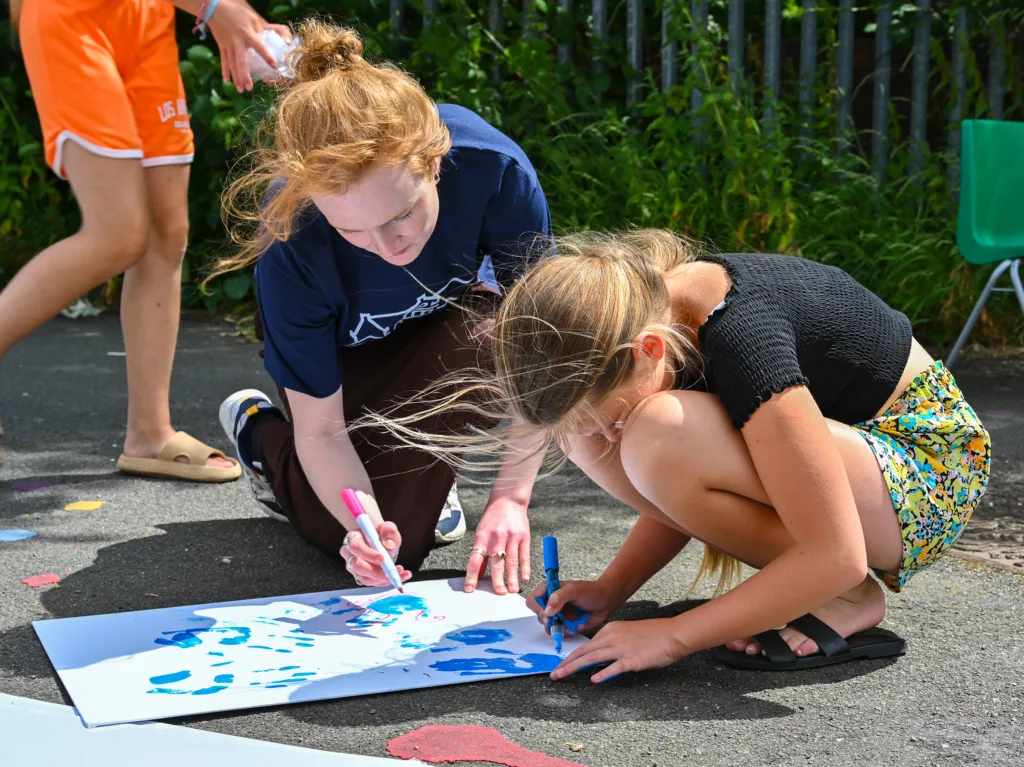
Play is my passion, it is something every child (and adult) should have access to; it’s hugely important as a way to process feelings and emotions, encourage learning and creativity and develop a sense of self. It’s also an essential tool when working with Gypsy and Traveller families and specifically children that have experienced trauma. I’m Leanne the new Children and Family Worker here at Leeds GATE and I bring my background in teaching and facilitating play. My newly created position came about after seeing a gap in support for families with children, and this can come in many varied forms.
When a family has experienced trauma, it affects every aspect of their daily life and living in survival mode really affects the mental and physical health of those involved. Many families within the Gypsy and Traveller community have experienced displacement: being forced to move away from family, flee or being separated from the community that is their life. This can shatter a family’s sense of belonging which then affect both their physical and mental health.
The importance of play for children’s mental health can’t really be overstated. Play can support children with trauma caused by relocation by rehabilitating them back into human connection in a safe way. It builds the broken bridges of trust and communication by growing a safe space to reconnect to the community and for children to have the freedom to explore and learn again.
A huge part of my work involves building trust and care with both the children and family members, that means not only listening to the family, but what the children themselves want to learn and do in our play sessions. My job is really varied from preparing children for school, supporting parents with applications and even home education literacy teaching. It means I can meet families where they are and prioritise their most urgent needs.
Each child is unique and it is essential that their individuality, interests and learning styles be at the forefront of the support I provide. It is a holistic approach that allows me to plan play sessions that involve multiple skills that can work individually, even within a group setting. In one family I’m working with there are three children of all differing ages, abilities and ways of understanding themselves and how and where they belong in the world.
There’s the loud, chatty seven year old, a very physical kinaesthetic learner (meaning he needs to use his whole body). He uses big gross motor movements when making fizzy potions to cause the biggest reaction between materials because he’s interested in volcanoes and natural disasters. The quiet twelve year old girl however, is more detail oriented and used her fine motor skills to carefully mix the exact colours she needed and so she could carefully and delicately pour her fizzy potions into latte art like a barista. It can also be seen in the eleven year old’s determination to complete a dominoes track that included lots of complicated tricks; this involved lots of testing, experimenting, problem solving and repeated failures to then create the final result.
Play gives each child the materials they need to access and develop their skills, but also the freedom of expression to use their creativity and imagination as they like.
Play can be a wonderful way to soothe the nervous system and bring children and adults out of survival mode and into a more regulated state for emotional recovery. The physiology of play allows children to physically shift emotions out of their body in the same way exercise does; it supports children to process their emotions, reduces stress in the body and adds some structure of safety and control over how they choose to engage in play. Trauma can also affect children’s confidence and self-esteem, but play is a great way to practise skills such as problem solving, experimentation, creativity, constructive failure that develops self-awareness, tenacity and resilience.
The freedom to explore and use their imagination has a lasting impact on the children’s confidence. Their personalities are emerging again and a whole new side to them is visible after the struggles they have faced in their very young years. After just a few sessions the change has been amazing and it has been an absolute joy to see.
The more confident they become in their own abilities, the more they are open to challenging projects and the more eager they are to learn. This then has a ripple effect throughout the family: mothers and grandmothers joining in with phonics games huddled around the kitchen table, a mum quietly building with Magnatiles next to her son as he problem solves the instability of his tower, and even parents giving a sigh of relief at hearing the laughter from the next room. The sessions don’t take away ongoing family stresses and challenges but lets children know this space is theirs, they are safe and they belong.
Find out more about our work in family support:
Other news
More news from Leeds GATE.


Announcements
|
Blog
|
Opportunities
